$('.navlist').one('mouseenter', function(event) { $('.dropdown-container').each(function(index, el) { var image = $(this).find('.get-image').attr('data-image'); $(this).find('.set-image').removeClass('lazyloaded').addClass('lazyload').attr('data-src', image); }); }); $('.dropdown-container').on('mouseenter', '.get-image', function(event) { var image = $(this).attr('data-image'), image2 = $(this).parents('.dropdown-container').find('.set-image'); image2.attr('src', image); });

Minimalist Living: A Guide to a Calm, Warm Home

Reading time: approx. 7 min.  ·  Last updated: 2 October 2026  ·  By Home Deluxe Editorial Team

In short: Minimalist living does not mean creating a bare home, but making more conscious choices. By reducing clutter, choosing a few high-quality pieces and working with warm natural tones, you can create a home that feels calm yet still inviting. In this guide, you will find the key principles of minimalist living, a step-by-step approach to decluttering and practical tips for every room.
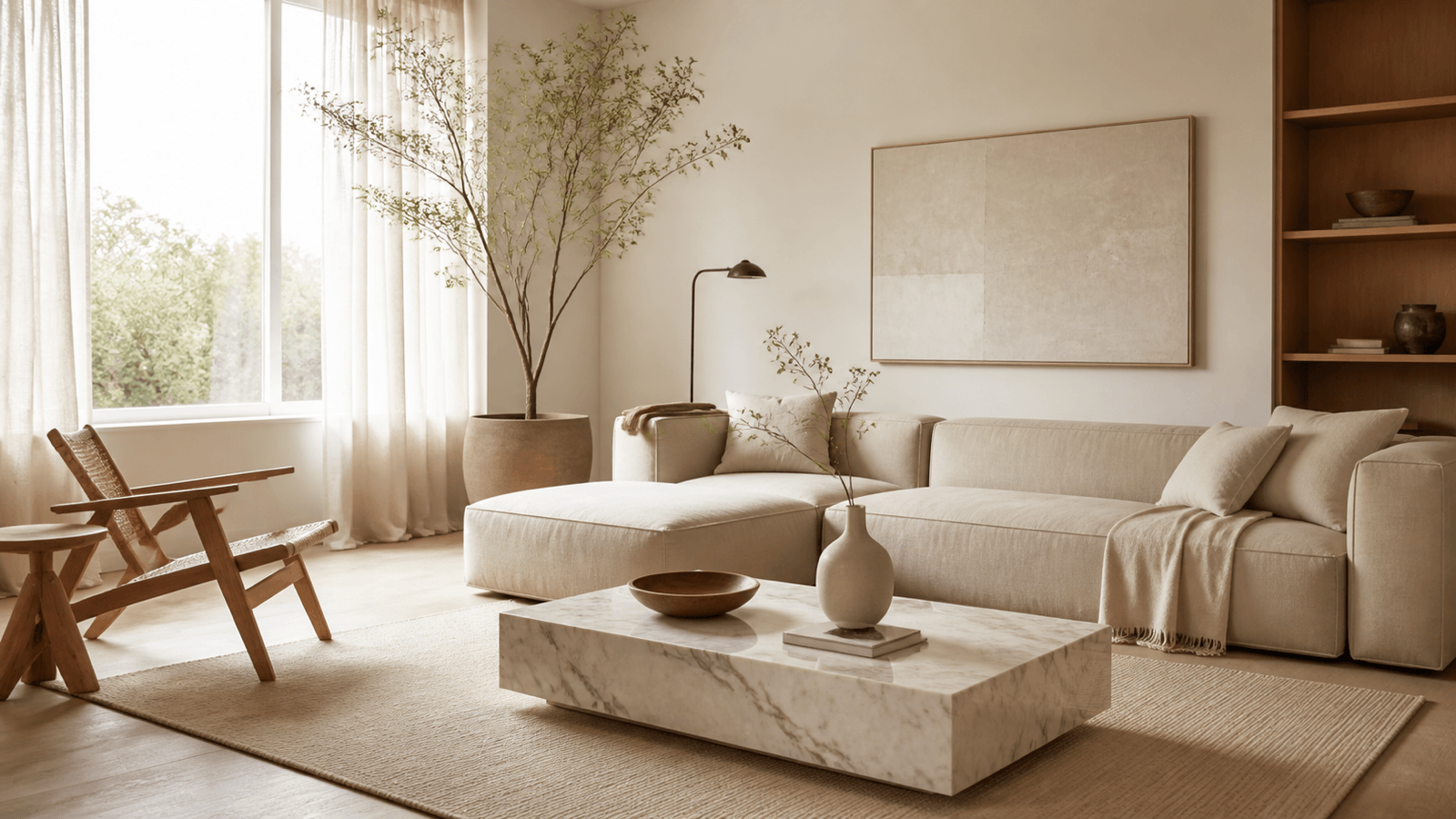
Minimalist living room in warm natural tones with a beige sofa, marble coffee table and plenty of daylight

Full shelves, cluttered surfaces and decorations in every corner – yet somehow the room still feels as though something is missing. This is exactly where minimalist living comes in. It is not about emptying a room, but about restoring a sense of calm. Less, but with greater impact. In this guide, we explain what lies behind the trend, how to simplify your home step by step and how warm natural tones can turn a clean, uncluttered space into a place that truly feels like home.

Key Facts at a Glance

  • Intentional rather than bare: Minimalism is about keeping what you genuinely need and love – not creating an empty room.
  • Less, but better: A few high-quality statement pieces often have more impact than lots of smaller items.
  • Natural tones add warmth: Beige, sand and cream can make rooms feel larger and calmer without looking cold.
  • Texture creates depth: Wood, linen, natural stone and wool bring life to a pared-back interior.
  • Organisation with a system: Dedicated places and closed storage help maintain the look over time.

What Does Minimalist Living Actually Mean?

Minimalist living means consciously focusing on what truly matters. It is not about going without for the sake of it, but about making a clear choice: only things that serve a purpose or bring you joy deserve a place in your home. The result is a space that feels tidy, visually calm and gives greater impact to the items that remain.

Modern minimalism has little in common with the cool, white-and-grey austerity of earlier years. Today, the focus is more on “soft” minimalism: pared back, yet warm and inviting. Clean shapes are combined with soft materials, calm colours with tactile textures. The result is a home that feels both timelessly elegant and genuinely cosy.

The Three Core Principles

  • Reduce: Let go of anything you do not need, love or use. Open space is a design element in its own right.
  • Quality over quantity: One well-made, durable piece of furniture is often better than three cheaper items that need replacing quickly.
  • Harmony: A calm colour palette and recurring materials help bring the room together into a cohesive whole.
💡 Tip: Ask yourself about every item: “Would I buy this again today?” If the answer is no, it may be time to let it go.

Less Is More: How to Simplify Step by Step

The path to a minimalist home does not begin in a furniture shop, but with decluttering. Once you have reduced what you own, it becomes much easier to see which few pieces the room actually needs. Work through your home one area at a time rather than trying to tackle everything at once.

  1. Choose a category: Focus on one group of items, such as books, decorations or textiles, rather than an entire room.
  2. Make everything visible: Gather all items from one category in one place so you can see how much you actually have.
  3. Sort into three piles: Keep, give away and maybe. Put the “maybe” pile in a box for four weeks.
  4. Give everything a permanent place: Every item you keep should have its own dedicated spot – this makes it easier to stay organised.
  5. Slow down new purchases: A simple rule such as “one in, one out” helps prevent clutter from building up again.
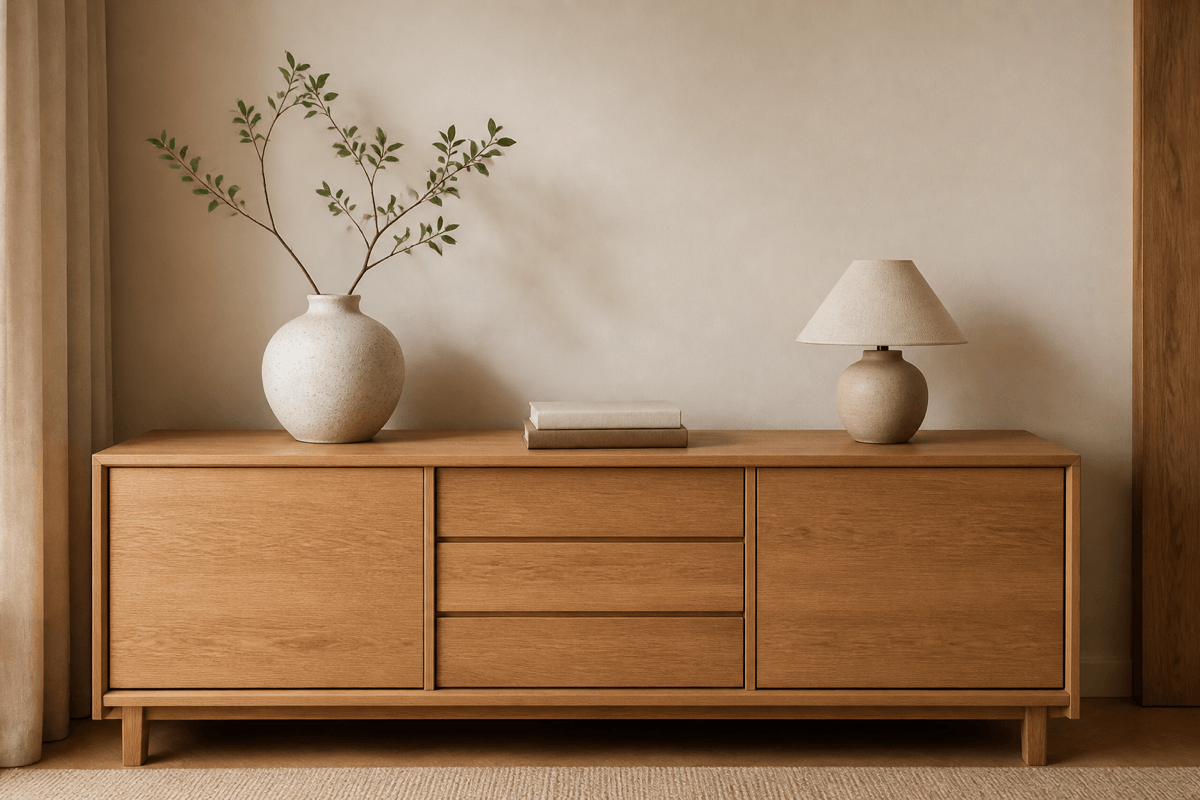
Tidy, minimally styled sideboard in natural tones with a few carefully selected home accessories
⚠️ Common mistake: Trying to declutter everything in a single weekend. It quickly becomes overwhelming, and many items end up back in the cupboard simply because you are exhausted. Small, manageable steps are much more likely to create lasting results.

Natural Tones & Materials: Warmth Instead of Coolness

A pared-back room comes to life through its choice of colours and materials. Natural tones such as beige, sand and cream have a calming effect, bring harmony to the space and can make it feel larger. They create a timeless, understated look while still feeling warm. Instead of using lots of different colours, stick to one cohesive colour family: when everything works together, you achieve the calm atmosphere that defines minimalist interiors.

To keep a tone-on-tone room from feeling flat, texture adds depth. This is exactly why natural materials are at the heart of soft minimalism. A marble-look coffee table such as the AMIRI coffee table can act as a statement piece, while a modular sofa in beige and textiles made from linen or wool complement the look perfectly.

Materials at a Glance
Natural Materials & Their Effect
🪵 Wood
Effectwarm, natural
Best fortables, sideboards
🧵 Linen
Effectlight, airy
Best forcurtains, cushions
🪨 Natural Stone
Effectelegant, calm
Best forsurfaces, bathrooms
✨ Marble Effect
Effectexclusive, clean
Best forcoffee tables
🐑 Wool
Effectsoft, cosy
Best forthrows, rugs
🏺 Clay
Effecthandcrafted, warm
Best forvases, décor
💡 Tip: Combine two or three materials in each room. This keeps the overall look calm while adding enough contrast to make the space feel lively.

Living Room Essentials in Natural Tones

Minimalism Room by Room

Every room has different requirements, but the principle remains the same: a few well-chosen pieces, calm colours and open surfaces that give the eye space to rest.
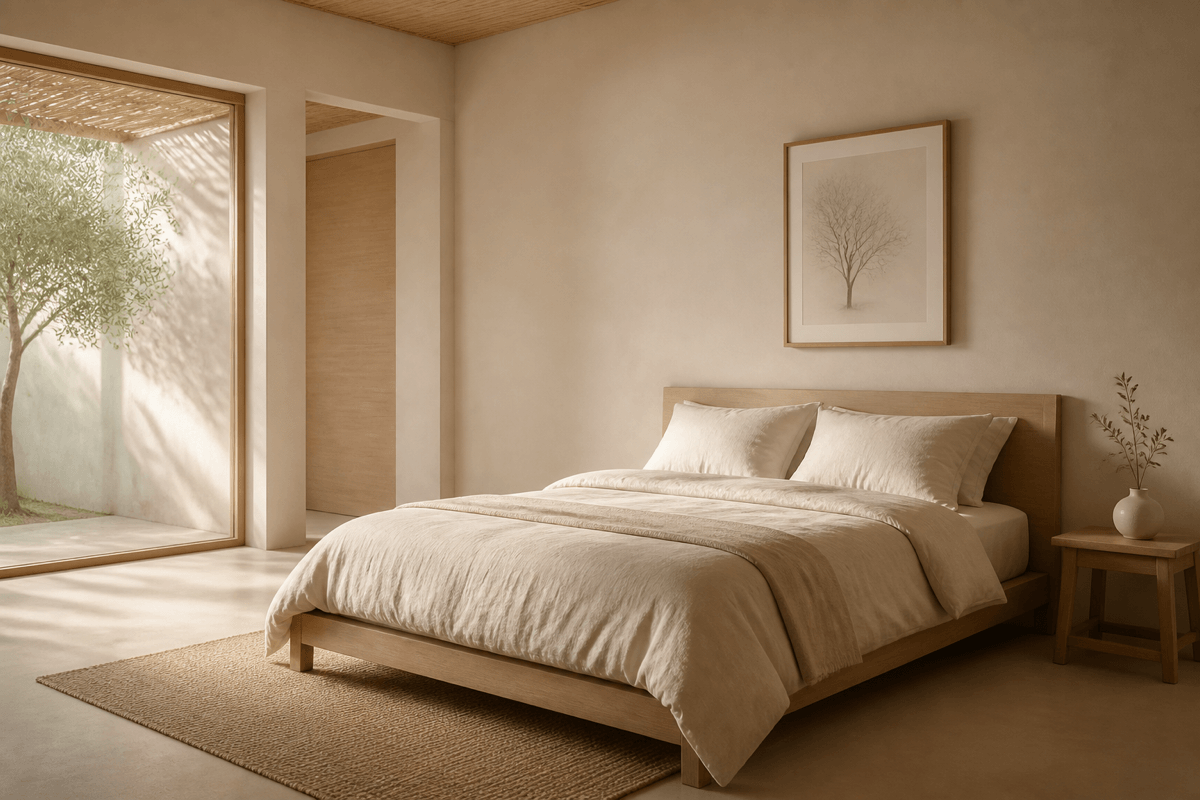
Minimalist bedroom in cream and sand tones with clean lines and just a few pieces of furniture

Living Room

Choose one large statement piece instead of lots of smaller furniture: a modular sofa in beige, a marble-look coffee table in front of it, plus closed storage such as a NYLA sideboard or a NYLA TV cabinet to keep cables and clutter out of sight.

Bedroom

This is where calm matters most. A low bed, a bedside table and soft linen bedding are often all you need. Keep the floor as clear as possible and avoid open shelving filled with lots of small items.

Dining Room

A clean-lined dining table in light oak with simple chairs creates a natural focal point. A wooden bench saves space and reinforces the natural look. For decoration, one bowl and one vase are enough.

Bathroom

Visible bottles and tubes can quickly make a bathroom feel cluttered. Choose closed bathroom furniture, a few natural materials and towels in a single colour family. This can make even a small bathroom feel more like a spa.

Natural Tones for a Cosy Home: Textiles & Lighting

The Most Common Mistakes – and How to Avoid Them

Minimalism rarely works perfectly on the first attempt. These are some of the most common pitfalls:

⚠️ Too bare instead of cosy: If you remove too much, a room can quickly start to feel cold and empty. The solution: deliberately bring back texture and one or two warm accents, such as a wool throw or a clay decorative piece.
⚠️ Too many colours: Even three or four different tones can disturb the sense of calm. Stick to one colour family and vary the materials instead.
⚠️ Open storage: Shelves filled with lots of small items can make a room feel visually busy. Choose closed cabinets and sideboards to keep surfaces looking calm and uncluttered.
💡 Tip: Give every room one “empty” area – a clear wall or an uncluttered corner of a table. These visual pauses are what make minimalist interiors feel so relaxing.

Frequently Asked Questions (FAQ)

What does minimalist living mean?
Minimalist living means consciously focusing on the essentials. Only things that serve a purpose or bring you joy are given a place. The aim is to create calm, uncluttered rooms that still feel warm and inviting.
How do I start embracing minimalism at home?
Start by decluttering, ideally category by category rather than room by room. Sort items into keep, give away and maybe, give every remaining item a permanent place and use the “one in, one out” rule to help prevent clutter from building up again.
Doesn’t a minimalist home feel cold and uninviting?
Not if you use warm natural tones and tactile textures. Beige, sand and cream combined with wood, linen and wool can make a pared-back room feel cosy and welcoming. Minimalism usually only feels cold when colour and texture are missing.
Which colours and materials suit minimalist interiors?
Calm natural tones such as beige, sand and cream within one colour family are ideal. Materials such as wood, linen, natural stone, marble effect, wool and clay add warmth and depth. Try combining two or three materials in each room.
How do I keep a minimalist home tidy in the long term?
Give every item a permanent place, use closed storage such as sideboards or cabinets and put small items away straight after use. The “one in, one out” rule helps stop rooms from gradually filling up again.

Conclusion: Less, but with Feeling

Minimalist living is not about giving things up, but about gaining a greater sense of calm. By reducing clutter consistently, investing in quality rather than quantity and choosing warm natural tones, you can create a home that feels relaxing yet still inviting. Start small – one room or one category at a time – and let the rest follow step by step.

Would you like to bring more calm into your home? Discover our furniture in soothing natural tones – from modular sofas to marble-look coffee tables.

Get €10 Off

Sign up for our newsletter and save €10 on your next order when you spend €150 or more.

Sign Up for the Newsletter
{ "@context": "https://schema.org", "@graph": [ { "@type": "BlogPosting", "@id": "https://www.homedeluxe.de/en/news-and-trends/living-trends/minimalist-living/#article", "mainEntityOfPage": { "@type": "WebPage", "@id": "https://www.homedeluxe.de/en/news-and-trends/living-trends/minimalist-living/" }, "headline": "Minimalist Living: A Guide to a Calm, Warm Home", "description": "Minimalist living made easy: discover key principles, step-by-step decluttering, natural tones and furniture ideas for a calm, warm and inviting home.", "image": "https://cdn02.plentyone.com/emoguafh21bo/frontend/BLOG/Minimalismus/minimalistisch-wohnen_titelbild.png", "inLanguage": "en-GB", "datePublished": "2026-10-02T09:00:00+02:00", "dateModified": "2026-10-02T09:00:00+02:00", "author": { "@type": "Organization", "name": "Home Deluxe Editorial Team", "url": "https://www.homedeluxe.de/en/shop/our-team/" }, "publisher": { "@type": "Organization", "name": "Home Deluxe GmbH", "url": "https://www.homedeluxe.de/en/", "logo": { "@type": "ImageObject", "url": "https://cdn02.plentyone.com/emoguafh21bo/frontend/BLOG/Allgemein/HD_logo.jpg" } } }, { "@type": "FAQPage", "@id": "https://www.homedeluxe.de/en/news-and-trends/living-trends/minimalist-living/#faq", "mainEntity": [ { "@type": "Question", "name": "What does minimalist living mean?", "acceptedAnswer": { "@type": "Answer", "text": "Minimalist living means consciously focusing on the essentials. Only things that serve a purpose or bring you joy are given a place. The aim is to create calm, uncluttered rooms that still feel warm and inviting." } }, { "@type": "Question", "name": "How do I start embracing minimalism at home?", "acceptedAnswer": { "@type": "Answer", "text": "Start by decluttering, ideally category by category rather than room by room. Sort items into keep, give away and maybe, give every remaining item a permanent place and use the “one in, one out” rule to help prevent clutter from building up again." } }, { "@type": "Question", "name": "Doesn’t a minimalist home feel cold and uninviting?", "acceptedAnswer": { "@type": "Answer", "text": "Not if you use warm natural tones and tactile textures. Beige, sand and cream combined with wood, linen and wool can make a pared-back room feel cosy and welcoming. Minimalism usually only feels cold when colour and texture are missing." } }, { "@type": "Question", "name": "Which colours and materials suit minimalist interiors?", "acceptedAnswer": { "@type": "Answer", "text": "Calm natural tones such as beige, sand and cream within one colour family are ideal. Materials such as wood, linen, natural stone, marble effect, wool and clay add warmth and depth. Try combining two or three materials in each room." } }, { "@type": "Question", "name": "How do I keep a minimalist home tidy in the long term?", "acceptedAnswer": { "@type": "Answer", "text": "Give every item a permanent place, use closed storage such as sideboards or cabinets and put small items away straight after use. The “one in, one out” rule helps stop rooms from gradually filling up again." } } ] } ] }
Our partners for sustainable development

Newsletter
Yes, I want to stay up to date with new products, news and offers. Please send me a newsletter.
I hereby confirm that I have read the Privacy policy. I can revoke my consent at any time.
Your 10€ welcome discount

With our newsletter you are always up to date! And as a thank you for subscribing to our newsletter, you will receive a €10 voucher for your next purchase.***

You agree that your data will be used to send you our newsletter. The newsletter can be cancelled at any time. Further information and cancellation notices can be found in our privacy policy.

function hideNLpop() { localStorage.setItem('showNLpop', 'false'); $('.nl-pop').removeClass('is-visible'); } function placeholder() { $('.nl-pop input[type="email"]').attr('placeholder','Your e-mail address'); $('.nl-pop button[type="button"]').text('Register now'); $('.nl-pop form label[for^="email-input-id_"], .nl-pop form .row .col-12.text-right.small.mt-2').remove(); } if(!localStorage.getItem('showNLpop')) { setTimeout(function () { $('.nl-pop').addClass('is-visible'); }, 8000); } setTimeout(function () { placeholder() }, 7990);
Location, language and currency settings
Select your delivery country to view the corresponding shipping costs and delivery times.
 Country of delivery
 Language (EN)
  German   Bulgarian   French   Italian   Spanish   Turkish   Dutch   Polish   Portuguese   Norwegian   Romanian   Danish   Swedish   Czech