$('.navlist').one('mouseenter', function(event) { $('.dropdown-container').each(function(index, el) { var image = $(this).find('.get-image').attr('data-image'); $(this).find('.set-image').removeClass('lazyloaded').addClass('lazyload').attr('data-src', image); }); }); $('.dropdown-container').on('mouseenter', '.get-image', function(event) { var image = $(this).attr('data-image'), image2 = $(this).parents('.dropdown-container').find('.set-image'); image2.attr('src', image); });

Outdoor Hot Tub: The Complete Guide to Wellness in Your Own Garden

Reading time: approx. 8 min.  ·  Last updated: 19 August 2026  ·  By Home Deluxe Editorial Team

In short: An outdoor hot tub brings wellness, massage and warm water straight to your garden – all year round. In this guide, you’ll discover the different types available, how much they cost to buy and run, what kind of base you need and how to keep the water clean with minimal effort.
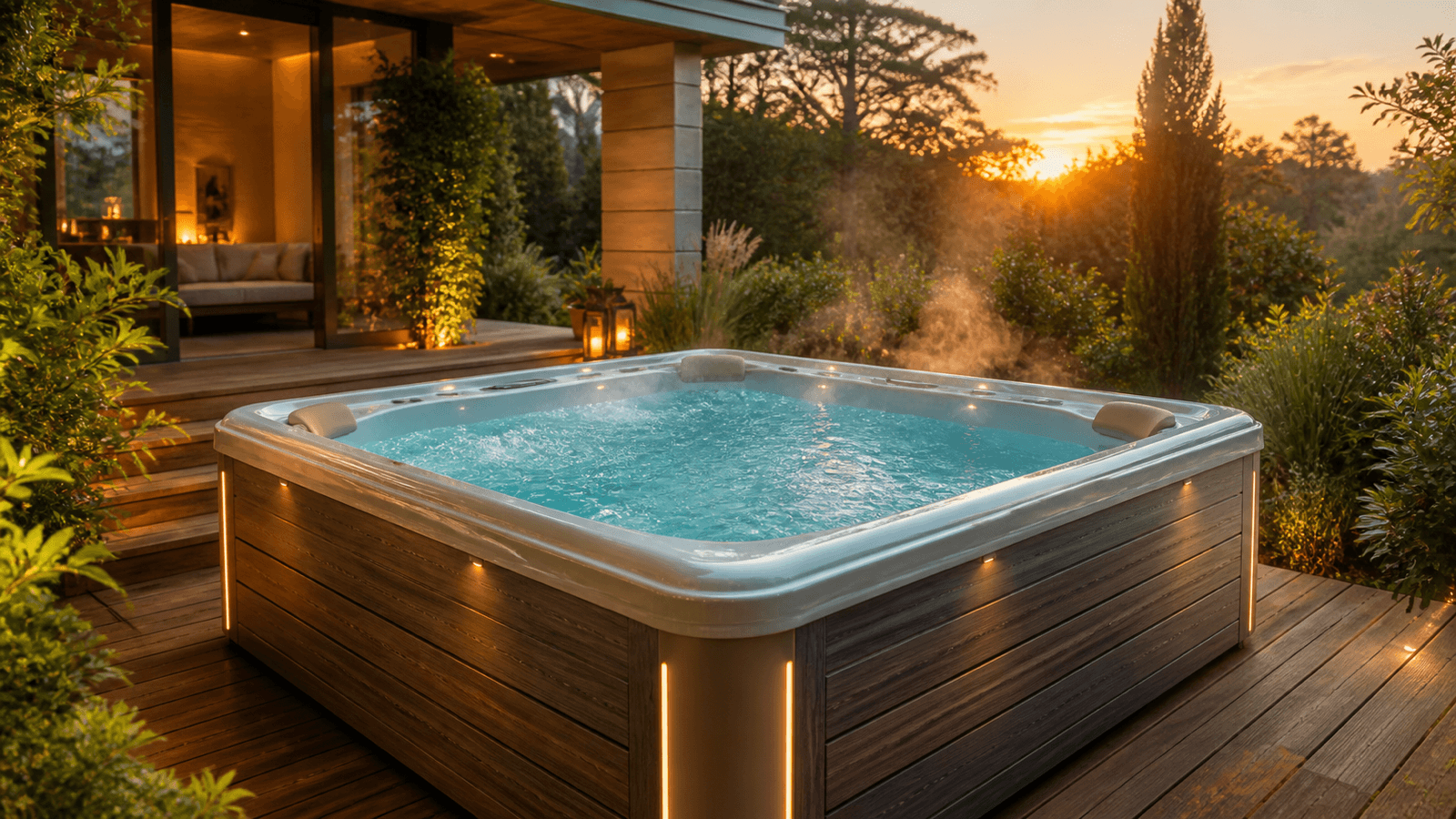
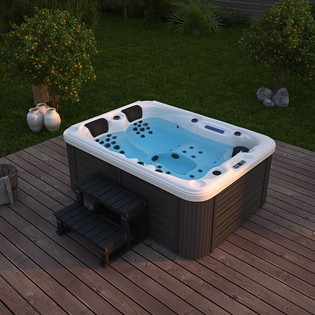
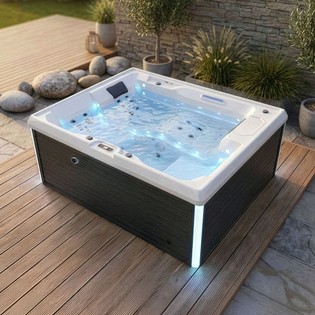
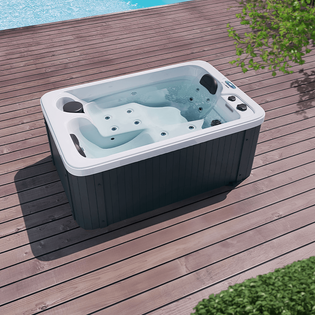
Modern outdoor hot tub on a wooden terrace in a garden at dusk

Sliding into warm, bubbling water after a long day – under the open sky: an outdoor hot tub can transform your garden or patio into your own private wellness retreat. Unlike a trip to the spa, relaxation is available whenever you want it – before work in the morning, beneath the stars in the evening or even surrounded by snow in winter. Before the bubbles start, however, it’s worth considering a few important questions: Which type is right for me? How much does it cost to run? And what should I know about installation and maintenance? This guide takes you through everything step by step.

Key Facts at a Glance

  • Two main types: Inflatable hot tubs are affordable and flexible (from around €350), while fixed acrylic models offer more comfort, better insulation and greater durability (15–20 years).
  • Running costs: Depending on the model and season, electricity costs are around €35–€100 per month. A good thermal cover can reduce heating energy consumption by up to 30%.
  • Base: The surface should be level and load-bearing. Fixed models require a stable base, such as a concrete slab, while inflatable hot tubs need a smooth, level surface.
  • Maintenance: With a filter, cover and the right water treatment, such as chlorine, bromine, ozone or UVC, maintenance is straightforward. Depending on use, the water should usually be changed every 3–4 months.
  • Suitable for year-round use: Well-insulated outdoor hot tubs can remain outside and be used even during winter.

Why Choose an Outdoor Hot Tub? Wellness & Health

Warm water and massage jets can benefit both body and mind. The heat widens the blood vessels and supports circulation, while targeted water and air jets help relax tense muscles. Many people use their hot tub as a regular way to switch off – the combination of warmth, buoyancy and gentle bubbling can noticeably reduce stress.

The main advantage compared with a spa or swimming pool is that your relaxing break is available whenever you want it and completely private. Outdoors, the experience can feel even more relaxing – with fresh air, views of the garden and, in winter, the contrast between cold air and warm water.
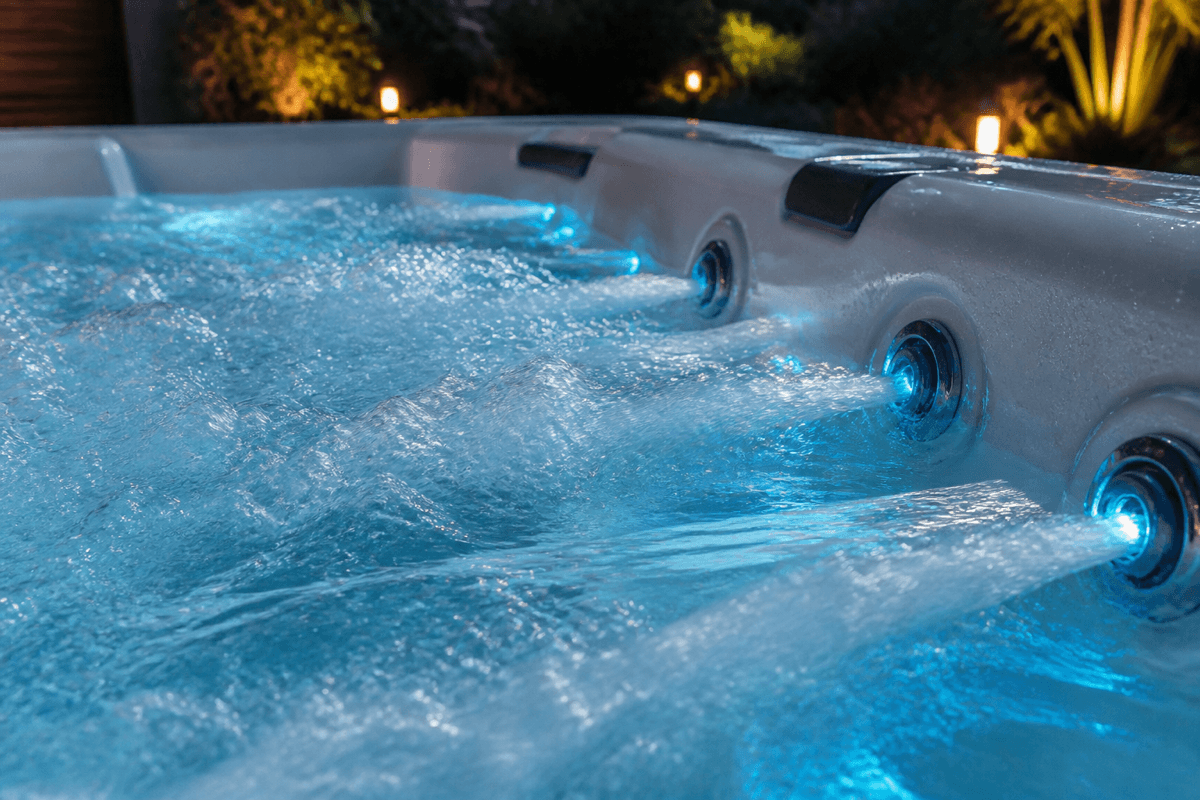
Close-up of bubbling water and massage jets in an outdoor hot tub
💡 Tip: If you mainly use your hot tub for relaxing as a couple, a compact 2–3 person model is often a better choice than a large spa – less water means faster heating and lower running costs.

Which Type Is Right for You? Inflatable vs. Fixed

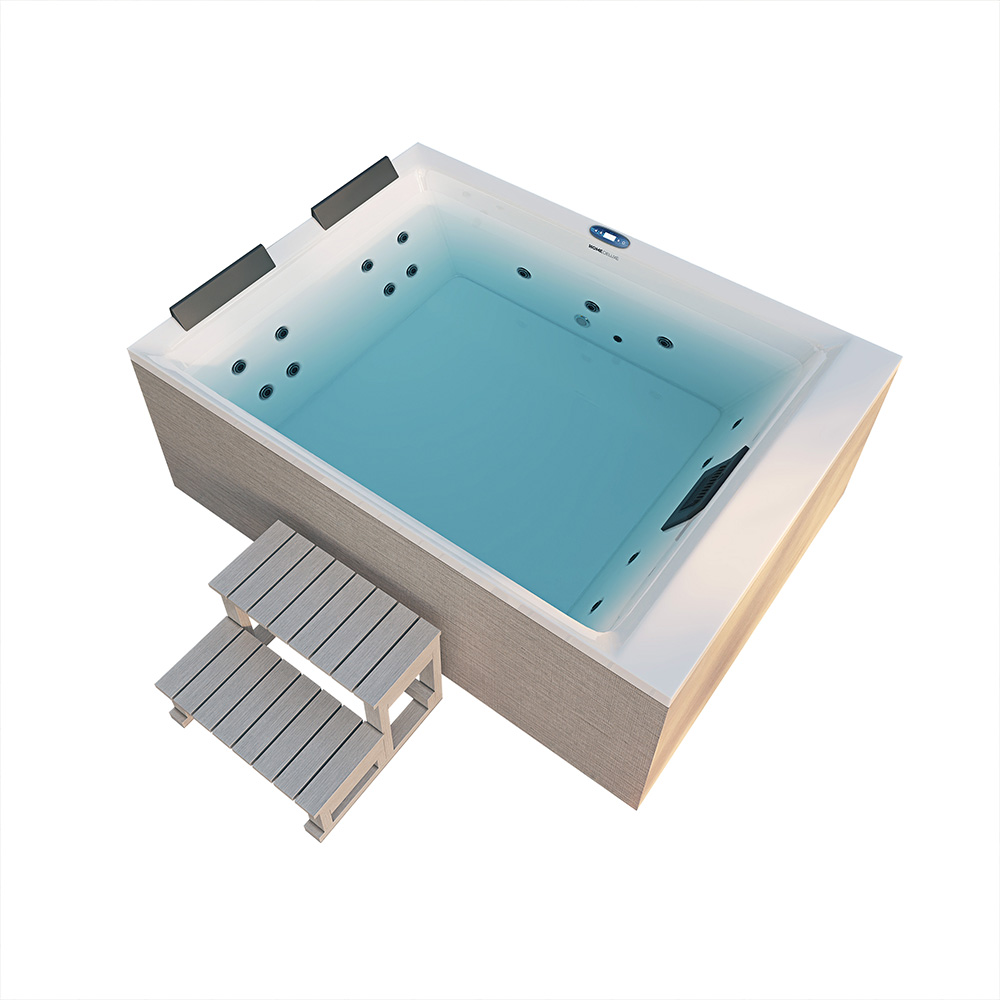
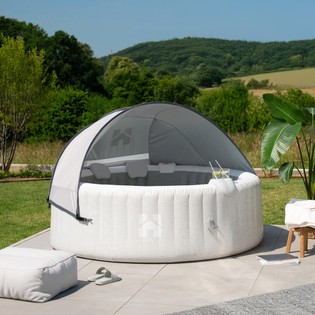
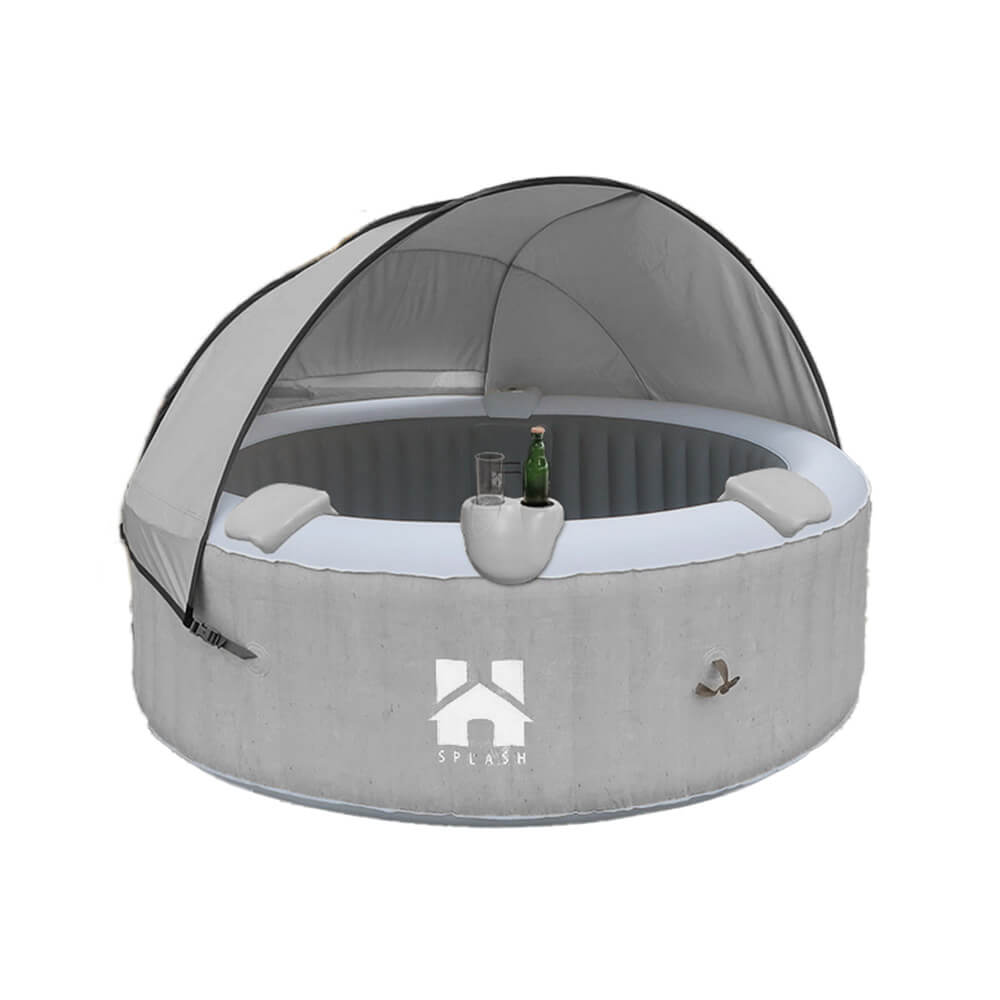
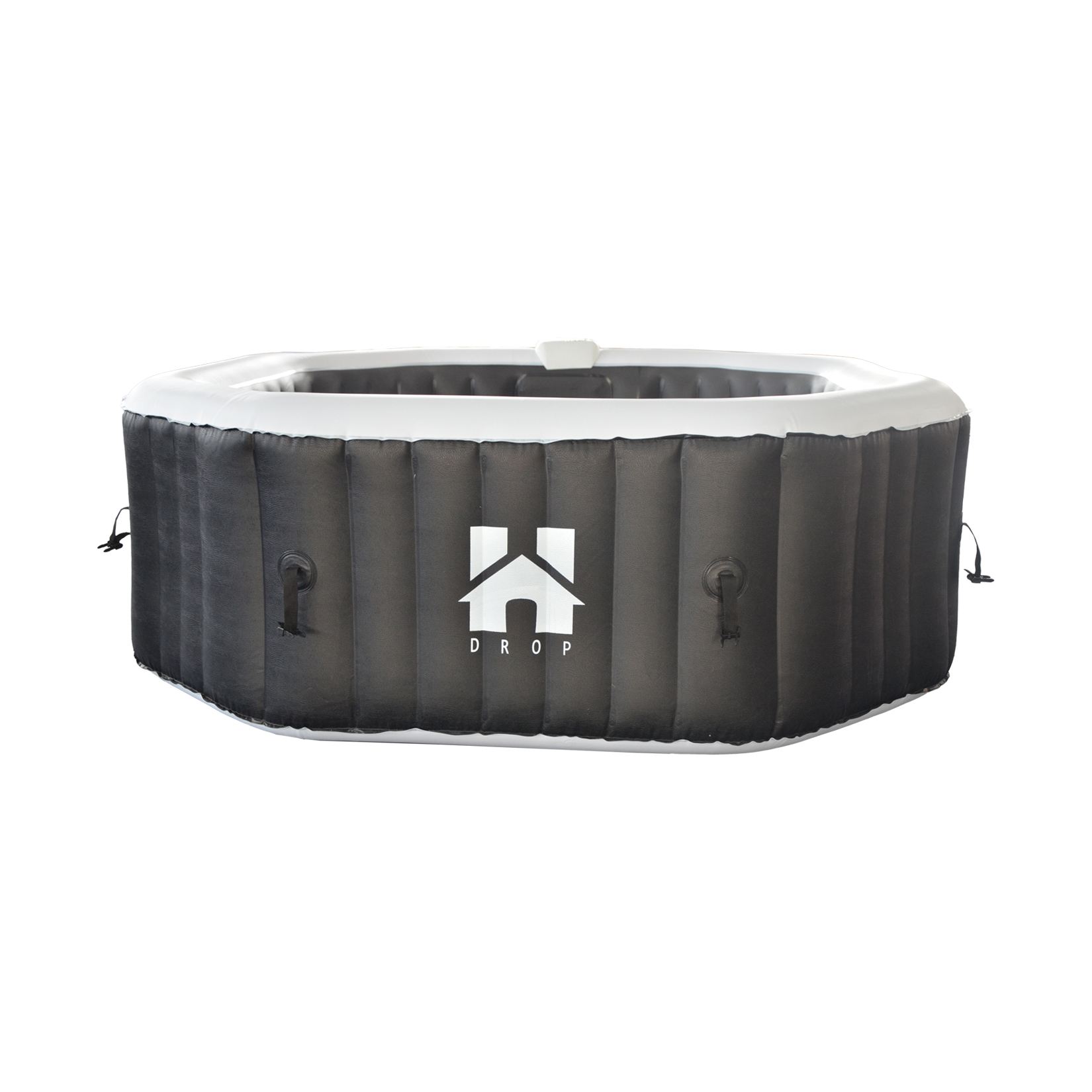
Outdoor hot tubs can generally be divided into two main groups. Inflatable models such as the SPLASH can be set up in minutes, are portable and affordable – ideal for trying out a hot tub, for renters or for flexible summer use. Fixed acrylic hot tubs such as the WHITE MARBLE or the STREAM PURE, on the other hand, offer powerful hydrotherapy, full-foam insulation and a lifespan of around 15 to 20 years.

Types Compared
Inflatable or Fixed – Which One Suits You?
🫧 Inflatable
Pricefrom approx. €350
Capacity4–6 people
MassageAir jets
InsulationBasic
Ideal forBeginners & portability
💎 Fixed (Acrylic)
Pricefrom approx. €2,500
Capacity2–3 people (comfortably)
MassageHydro & air jets
InsulationFull foam, excellent
Ideal forPermanent home use
🧭 How to Choose
  • Planning to use it often all year round? → fixed model
  • Want to try it first or live in rented accommodation? → inflatable
  • Powerful massage is important? → hydro jets
  • Want lower electricity costs? → good insulation

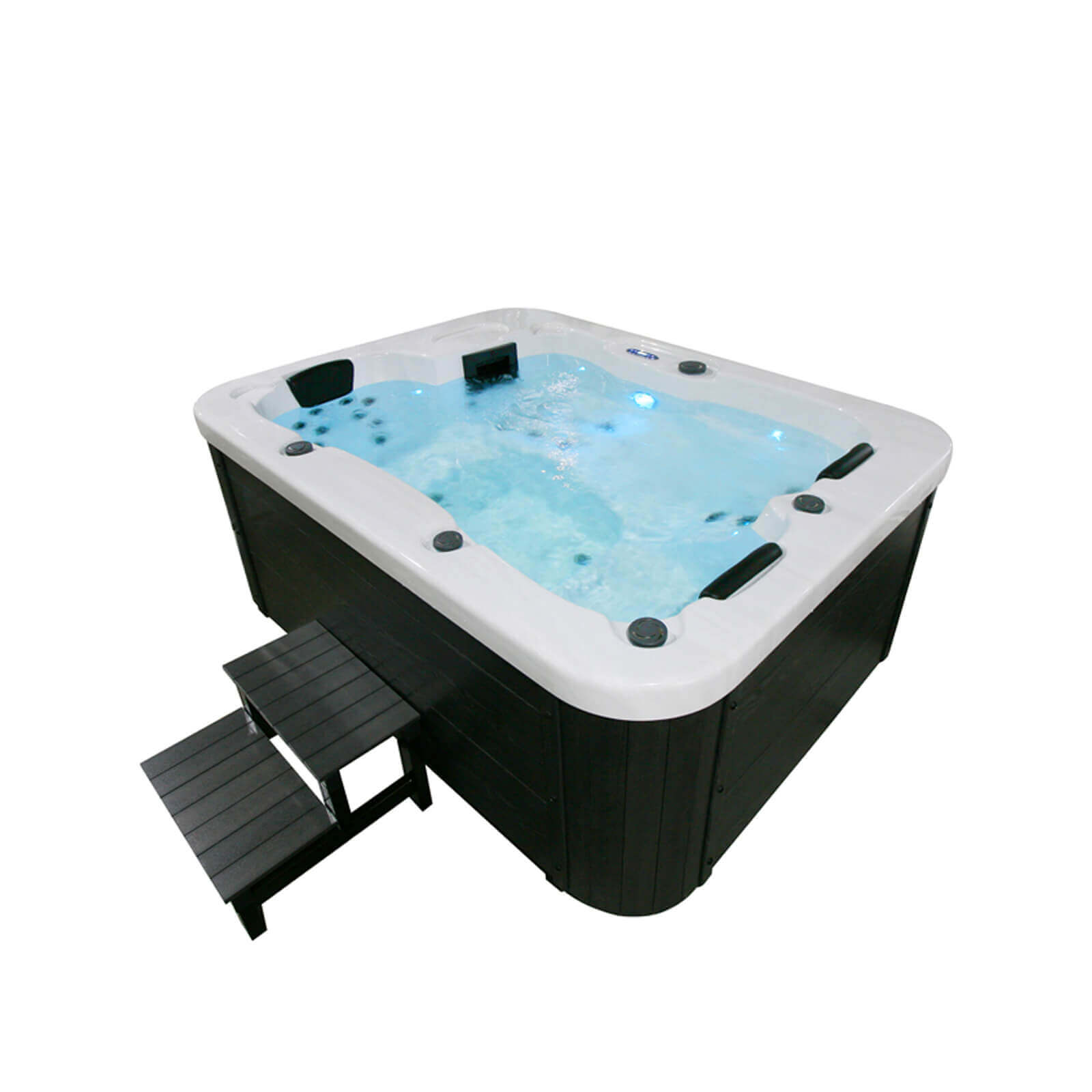
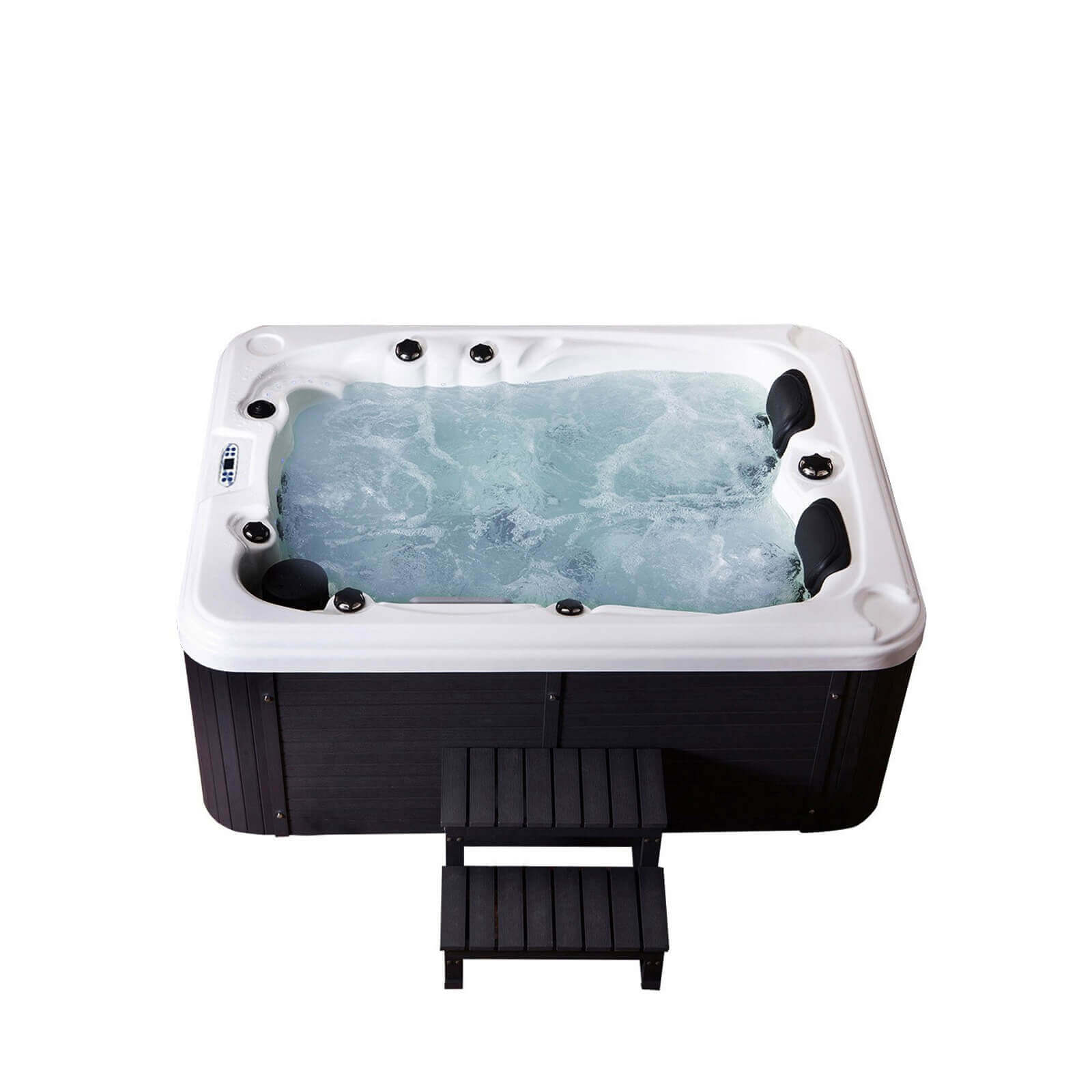
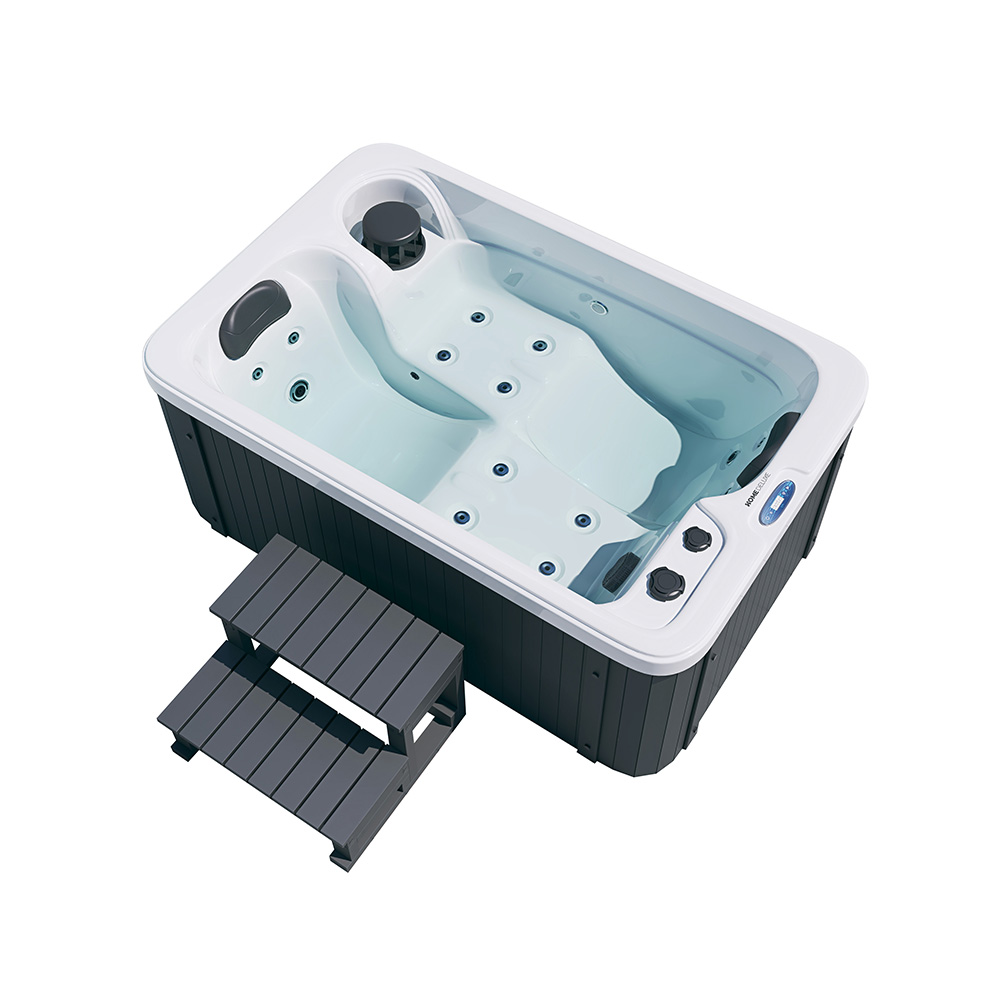
If you want the comfort of a fixed model but only need space for two people, the HORIZON PURE or NIMBUS are compact entry-level options with ozone disinfection and a thermal cover. You can find a wide selection of fixed and inflatable models in our Outdoor Hot Tubs category.

Our Fixed Outdoor Hot Tubs with Massage & Thermal Cover

Installation, Base & Power Connection

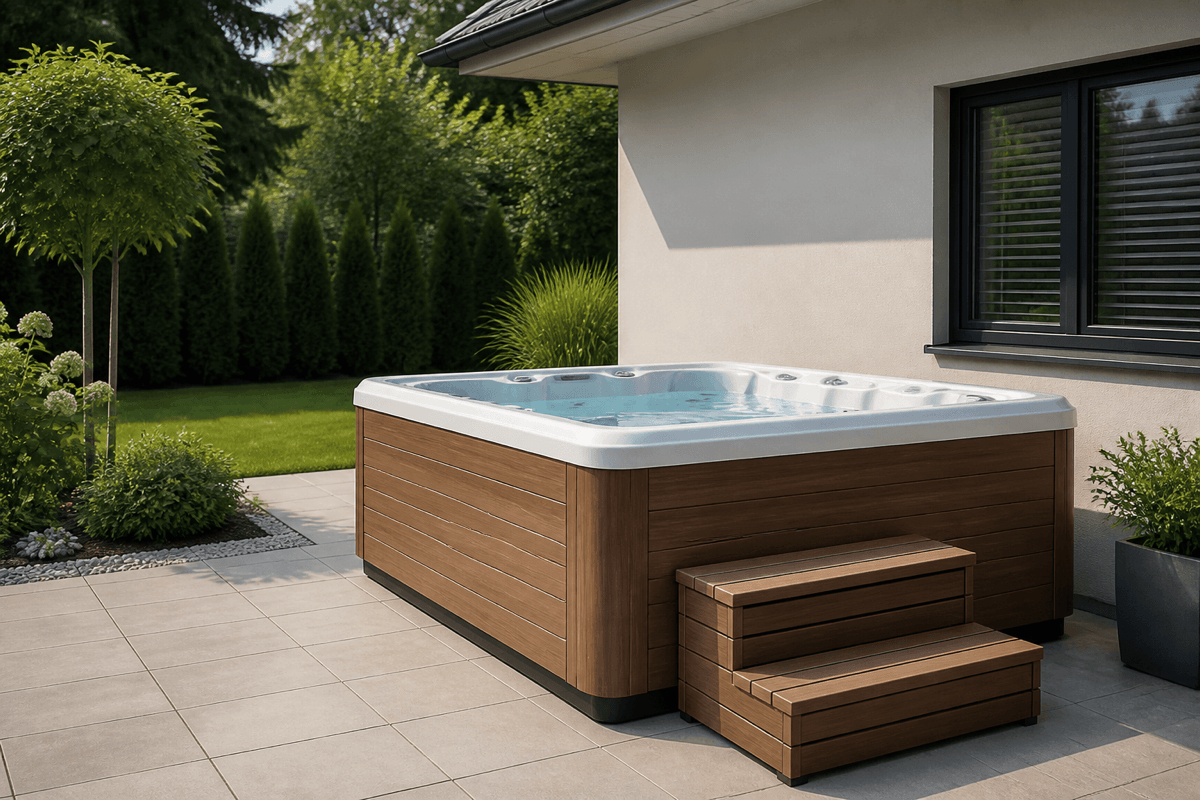
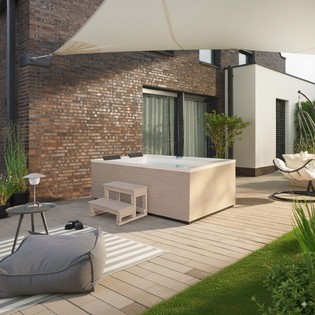
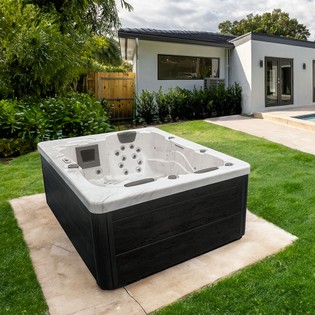
Outdoor hot tub on a level patio surface with steps and wood-look cladding

The most important requirement is a level, load-bearing base. A filled hot tub can easily weigh more than a tonne once the water, shell and people are taken into account. Fixed acrylic models are therefore best placed on a stable concrete slab (at least around 10 cm thick) or on a patio designed to support the load. Inflatable models need a smooth, level surface free from sharp objects; a protective ground sheet provides additional protection.

When choosing the location, it also helps to have a sheltered spot out of the wind, as this can reduce heating costs, as well as short access to the house and a nearby power supply. Smaller and inflatable hot tubs often run from a standard 230 V socket, while larger fixed models may require a 400 V three-phase connection depending on their heating output.

⚠️ Common mistake: Placing the hot tub directly on grass or uneven paving slabs. Over time, the surface may sink, the tub can become distorted and leaks may develop. It is better to create a firm, level base before installation.

Costs & Electricity Consumption

Alongside the purchase price, the main ongoing expense is electricity, as the water is usually kept at around 37–38°C. Actual running costs depend heavily on the insulation, cover, outside temperature and your preferred water temperature. As a rough guide, based on an electricity price of around €0.37/kWh and year-round use:

  • Inflatable (4–6 people): approx. 5–9 kWh/day, around €55–€100 per month.
  • Mid-range fixed model (4–5 people): approx. 3–6 kWh/day, around €35–€65 per month.
  • Premium full-foam model (6–8 people): approx. 4–7 kWh/day, around €45–€80 per month.

In winter, energy consumption can roughly double, while in summer it is significantly lower. Insulation makes the biggest difference: fixed models with full-foam insulation retain heat far more effectively than inflatable models with air-filled walls.

💡 Tip: An insulated thermal cover can reduce heating energy consumption by up to 30%, while lowering the water temperature by just one degree can reduce energy use by around 10%. To save energy, keep the hot tub covered whenever possible and only set the temperature as high as you actually need.

Maintenance & Water Quality

Keeping the water clean is easier than many people think. The key component is the filter, which continuously removes dirt from the water and should be rinsed regularly or replaced every few weeks, depending on how often the hot tub is used. You can also use chlorine or bromine for disinfection and check the pH level with simple test strips. Ideally, the pH should be around 7.0–7.4.

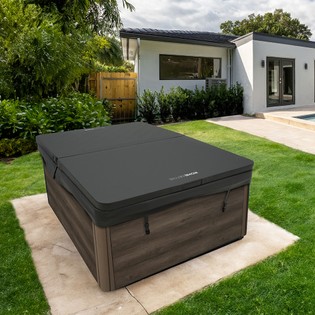
Modern models such as the HORIZON PURE also use ozone disinfection, which helps reduce the amount of chemicals required. Depending on usage, you should plan a complete water change every 3–4 months. Between uses, the thermal cover helps keep out dirt and leaves while also reducing heat loss.
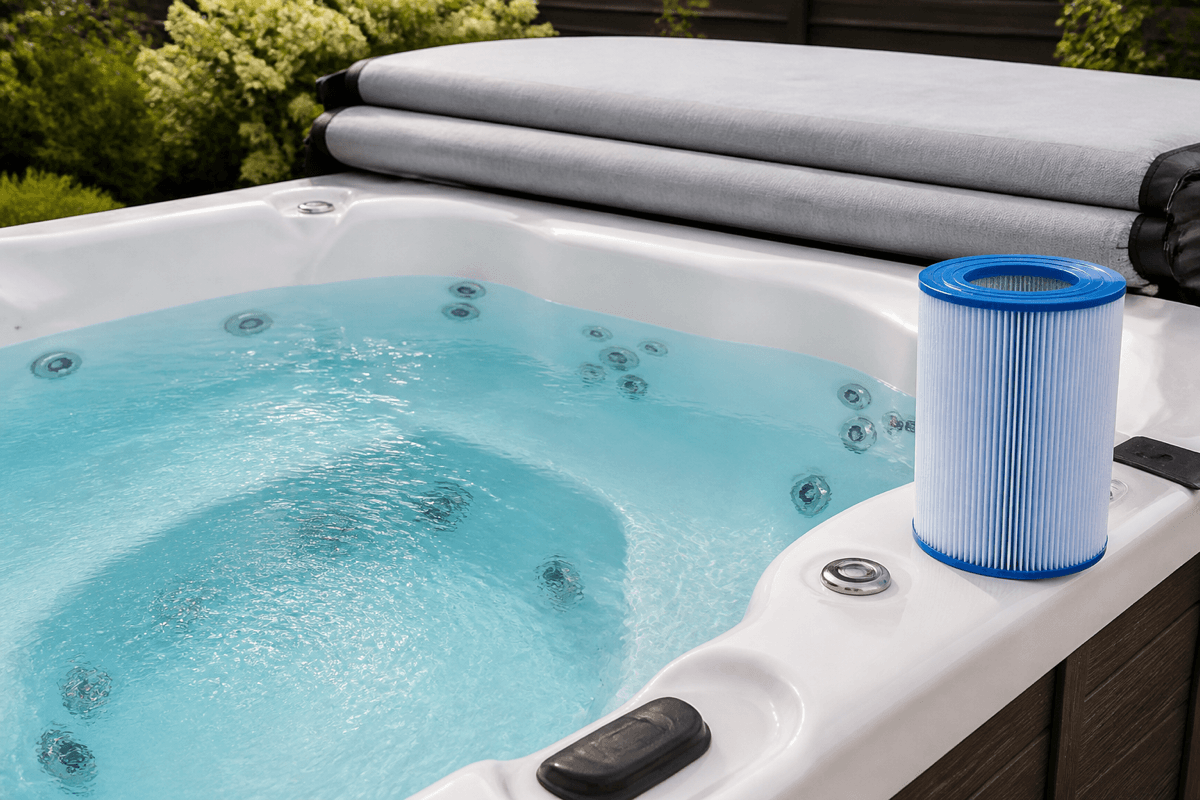
Clear water in an outdoor hot tub with a filter and thermal cover in the background
⚠️ Common mistake: Using too much or too little disinfectant. Cloudy water, a strong chlorine smell or skin irritation are often linked to an unbalanced pH level. It is better to test the water regularly and adjust the treatment gradually in small amounts.

Start Flexible: Compact & Inflatable Hot Tubs

Frequently Asked Questions (FAQ)

How much does an outdoor hot tub cost to run per month?
Depending on the model, insulation and season, electricity costs are roughly between €35 and €100 per month. Fixed models with full-foam insulation are generally more efficient than inflatable hot tubs, while a thermal cover can reduce energy consumption by up to 30%.
Can an outdoor hot tub stay outside in winter?
Yes. Well-insulated, permanently installed outdoor hot tubs are designed for year-round use and can remain outside and heated during winter. A suitable thermal cover and continuous operation are important to prevent the water from freezing.
What kind of base does an outdoor hot tub need?
The surface must be level and load-bearing, as a filled hot tub can quickly weigh more than a tonne. A stable concrete slab or suitably reinforced patio is ideal for fixed models, while inflatable hot tubs need a smooth, level surface with a protective ground mat.
Inflatable or fixed hot tub – which is better?
That depends on how you plan to use it. Inflatable models are affordable, portable and quick to set up, making them ideal for beginners. Fixed acrylic hot tubs offer more powerful massage, better insulation, lower running costs and a lifespan of around 15 to 20 years.
How often should I change the water?
Depending on usage, the water should usually be changed every 3 to 4 months. Between changes, filtration, disinfection with chlorine, bromine or ozone, and a balanced pH level help keep the water clean. A cover also protects against dirt and leaves.
Do I need a three-phase power connection?
Not necessarily. Smaller and inflatable hot tubs often run from a standard 230 V socket. Larger fixed models with more powerful heaters may require a 400 V three-phase connection depending on the design. You can find this information in the technical specifications of the individual model.

Conclusion: Wellness That’s Worth It

An outdoor hot tub is an investment in relaxation, wellbeing and a better quality of life at home. If you want an affordable and flexible way to get started, an inflatable model is a great choice. If you’re looking for powerful massage, lower running costs and year-round use, a fixed acrylic hot tub is the better option. With the right base, a good thermal cover and simple water care, nothing stands in the way of relaxing in warm, bubbling water after a long day.

Take your time browsing our range – from compact entry-level models to fully equipped premium hot tubs. If you have any questions, we’ll be happy to advise you by phone or at one of our showrooms.

Get €10 Off

Sign up for our newsletter and save €10 on your next order when you spend €150 or more.

Sign Up for the Newsletter
{ "@context": "https://schema.org", "@graph": [ { "@type": "BlogPosting", "@id": "https://www.homedeluxe.de/blog/outdoor-whirlpools/#article", "mainEntityOfPage": { "@type": "WebPage", "@id": "https://www.homedeluxe.de/blog/outdoor-whirlpools/" }, "headline": "Outdoor Hot Tub: The Complete Guide to Wellness in Your Own Garden", "description": "Looking for an outdoor hot tub? Discover everything about types, costs, electricity consumption, installation and maintenance – plus an overview of top Home Deluxe models.", "image": "https://cdn02.plentyone.com/emoguafh21bo/frontend/BLOG/outdoor_whirlpool/outdoor-whirlpool_titelbild.png", "inLanguage": "en-GB", "datePublished": "2026-08-19T09:00:00+02:00", "dateModified": "2026-08-19T09:00:00+02:00", "author": { "@type": "Organization", "name": "Home Deluxe Editorial Team", "url": "https://www.homedeluxe.de/shop/unser-team/" }, "publisher": { "@type": "Organization", "name": "Home Deluxe GmbH", "url": "https://www.homedeluxe.de/", "logo": { "@type": "ImageObject", "url": "https://cdn02.plentyone.com/emoguafh21bo/frontend/BLOG/Allgemein/HD_logo.jpg" } } }, { "@type": "FAQPage", "@id": "https://www.homedeluxe.de/blog/outdoor-whirlpools/#faq", "mainEntity": [ { "@type": "Question", "name": "How much does an outdoor hot tub cost to run per month?", "acceptedAnswer": { "@type": "Answer", "text": "Depending on the model, insulation and season, electricity costs are roughly between €35 and €100 per month. Fixed models with full-foam insulation are generally more efficient than inflatable hot tubs, while a thermal cover can reduce energy consumption by up to 30%." } }, { "@type": "Question", "name": "Can an outdoor hot tub stay outside in winter?", "acceptedAnswer": { "@type": "Answer", "text": "Yes. Well-insulated, permanently installed outdoor hot tubs are designed for year-round use and can remain outside and heated during winter. A suitable thermal cover and continuous operation are important to prevent the water from freezing." } }, { "@type": "Question", "name": "What kind of base does an outdoor hot tub need?", "acceptedAnswer": { "@type": "Answer", "text": "The surface must be level and load-bearing, as a filled hot tub can quickly weigh more than a tonne. A stable concrete slab or suitably reinforced patio is ideal for fixed models, while inflatable hot tubs need a smooth, level surface with a protective ground mat." } }, { "@type": "Question", "name": "Inflatable or fixed hot tub – which is better?", "acceptedAnswer": { "@type": "Answer", "text": "That depends on how you plan to use it. Inflatable models are affordable, portable and quick to set up, making them ideal for beginners. Fixed acrylic hot tubs offer more powerful massage, better insulation, lower running costs and a lifespan of around 15 to 20 years." } }, { "@type": "Question", "name": "How often should I change the water?", "acceptedAnswer": { "@type": "Answer", "text": "Depending on usage, the water should usually be changed every 3 to 4 months. Between changes, filtration, disinfection with chlorine, bromine or ozone, and a balanced pH level help keep the water clean. A cover also protects against dirt and leaves." } }, { "@type": "Question", "name": "Do I need a three-phase power connection?", "acceptedAnswer": { "@type": "Answer", "text": "Not necessarily. Smaller and inflatable hot tubs often run from a standard 230 V socket. Larger fixed models with more powerful heaters may require a 400 V three-phase connection depending on the design. You can find this information in the technical specifications of the individual model." } } ] } ] }
Our partners for sustainable development

Newsletter
Yes, I want to stay up to date with new products, news and offers. Please send me a newsletter.
I hereby confirm that I have read the Privacy policy. I can revoke my consent at any time.
Your 10€ welcome discount

With our newsletter you are always up to date! And as a thank you for subscribing to our newsletter, you will receive a €10 voucher for your next purchase.***

You agree that your data will be used to send you our newsletter. The newsletter can be cancelled at any time. Further information and cancellation notices can be found in our privacy policy.

function hideNLpop() { localStorage.setItem('showNLpop', 'false'); $('.nl-pop').removeClass('is-visible'); } function placeholder() { $('.nl-pop input[type="email"]').attr('placeholder','Your e-mail address'); $('.nl-pop button[type="button"]').text('Register now'); $('.nl-pop form label[for^="email-input-id_"], .nl-pop form .row .col-12.text-right.small.mt-2').remove(); } if(!localStorage.getItem('showNLpop')) { setTimeout(function () { $('.nl-pop').addClass('is-visible'); }, 8000); } setTimeout(function () { placeholder() }, 7990);
Location, language and currency settings
Select your delivery country to view the corresponding shipping costs and delivery times.
 Country of delivery
 Language (EN)
  German   Bulgarian   French   Italian   Spanish   Turkish   Dutch   Polish   Portuguese   Norwegian   Romanian   Danish   Swedish   Czech