
With our newsletter you are always up to date! And as a thank you for subscribing to our newsletter, you will receive a €10 voucher for your next purchase.***
- Bathroom
- Categories
- Bathtubs
- Shower enclosures
- Bathroom furniture
- Shower panels
- Mirror
- Shower channels
- Shower cubicles
- Steam showers
- Whirlpools
- Fittings
- Bathroom textiles & accessories
- Bathroom accessories
- Categories
- Sauna & infrared cabin
- Categories
- Infrared cabins
- Outdoor saunas
- Indoor Saunas
- Barrel Saunas
- Sauna accessories
- Categories
- Living
- Categories
- Sofas
- Coffee Table
- Tables
- Rugs
- Lamps & Lighting
- Wall
- Glass Doors / Sliding Doors
- Air Conditioners & Heating Systems
- Flooring Solutions
- Electronic Devices
- Mirrors
- Chairs & Armchairs
- Beds
- Shelves
- Coat Racks
- Rooms
- Living Room
- Dining Room
- Hallway
- Bedroom
- Office
- Kids Room
- Kitchen Furniture & Appliances
- Categories
- Garden
- Categories
- Outdoor Whirlpools
- Flooring
- Garden Sheds & Trash Bin Storage
- Carports
- Garden / Balcony Furnitures
- Lawn Mower
- Awning
- Terrace
- Facade Cladding
- Solar & Heat Pumps
- Hot Tubs & Cold Tubs
- Garden Decoration
- Terrace Roofs
- Play Tools
- Fences
- Garden Tools
- Top Category
- WPC privacy fences
- Outdoor saunas
- Hanging chair
- WPC decking boards
- WPC tiles
- Categories
- Pet supplies
- Categorie
- Cat Trees
- Pet Beds
- Puppy Playpens
- Categorie
- Leisure & Sports
- Sale%
Infrared Cabin vs. Sauna: Which Wellness Option Is Right for You?
Reading time: approx. 7 min. · Last updated: 5 August 2026 · By Home Deluxe Editorial Team
In short: A traditional sauna heats the air to 80–100 °C, creating intense heat, heavy sweating and the classic sauna infusion experience. An infrared cabin works at around 30–60 °C and heats the body directly – it is quicker to use, more energy-efficient and requires less space. Which option suits you best depends on the space available, your budget and how much heat you enjoy.
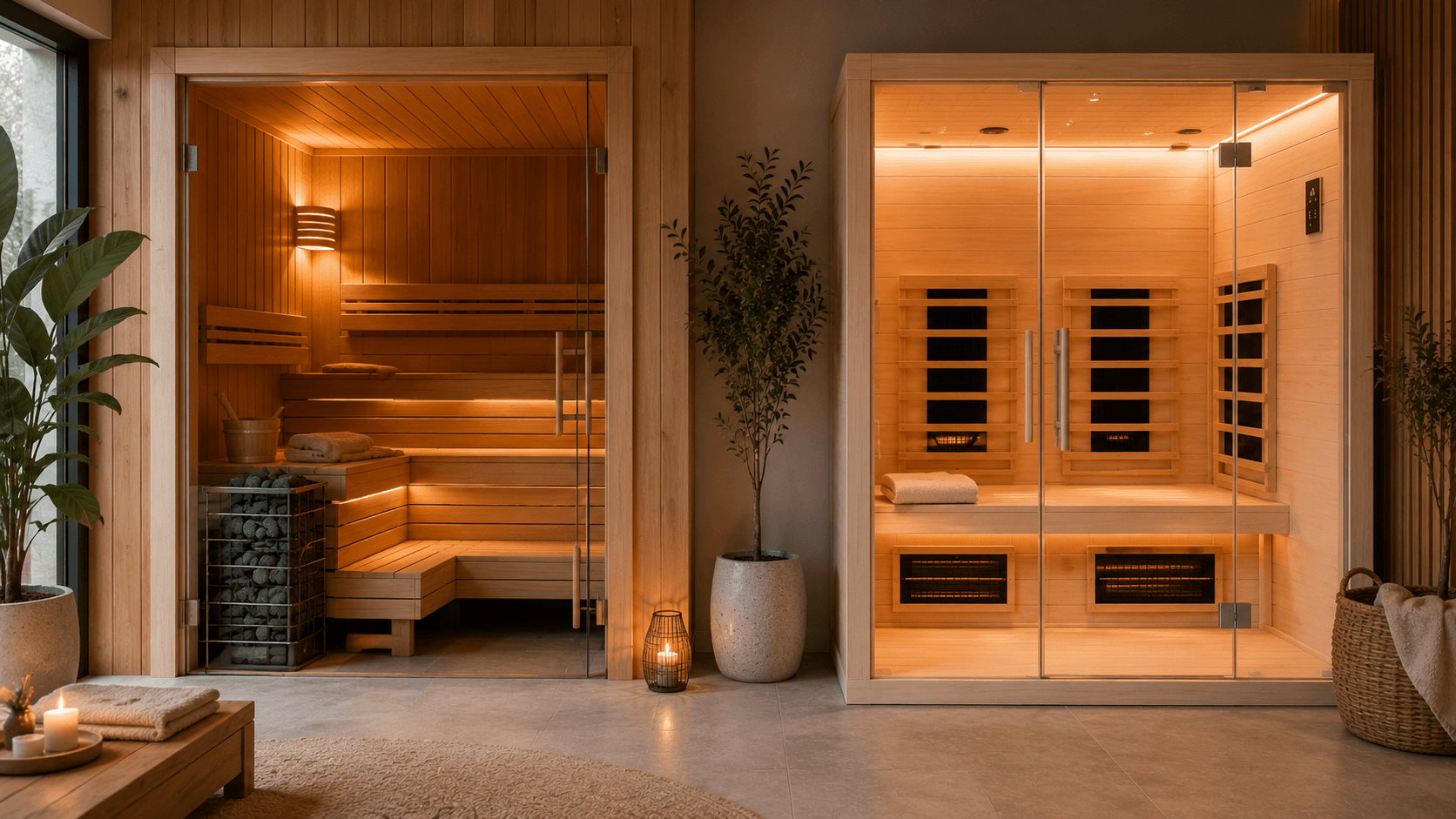
Heat feels good – something the Finns have known for generations. But if you want to create your own wellness retreat at home, one question quickly arises: should you choose a traditional sauna or infrared cabin? Both provide soothing warmth and invite you to relax, but they work in very different ways. In this guide, we compare the two wellness options side by side – from temperature and how the heat feels to electricity consumption, space requirements and which option is likely to suit you best.
The Traditional Sauna
A traditional Finnish sauna uses intense heat: a sauna heater raises the air temperature to around 80–100 °C, while infusions with water and essential oils create short, powerful waves of heat and a noticeable tingling sensation on the skin. For many people, this ritual of heating up, sweating and cooling down is the ultimate form of relaxation.
Benefits of a Traditional Sauna
- Intense sweating: helps cleanse the skin and is often experienced as deeply relaxing.
- Immune system: regular sauna sessions may help support the body's natural defences.
- Circulation: alternating between heat and cooling stimulates the cardiovascular system.
- Sauna infusion experience: enjoy the traditional Finnish ritual with fragrances and waves of heat.
- Social experience: larger cabins offer enough space for family and friends.
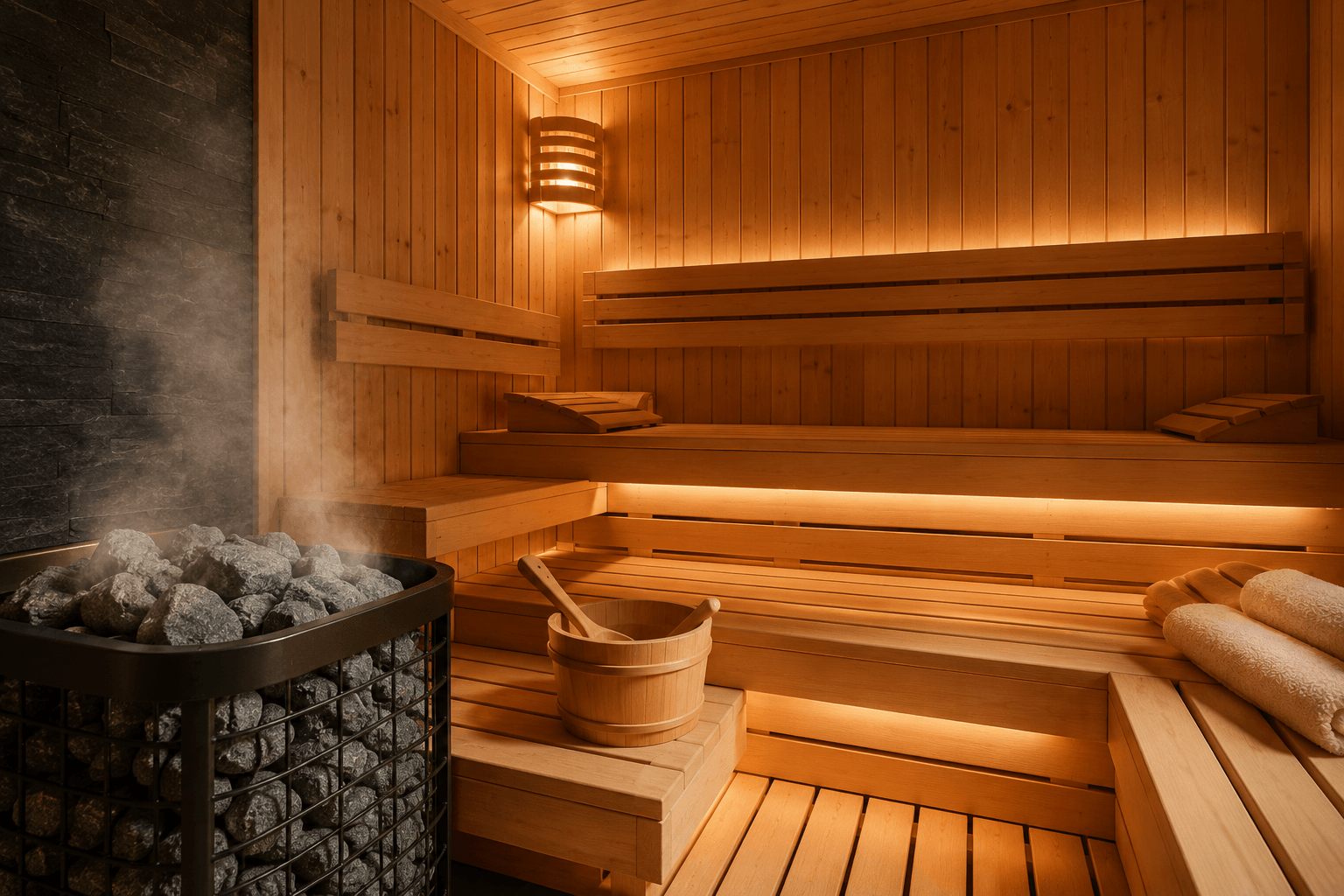
Things to consider include the higher energy consumption, a heat-up time of around 30 to 60 minutes and the greater amount of space required. The high temperatures are not ideal for everyone either – if you are sensitive to heat or have circulation concerns, it is best to start gradually. If you prefer the traditional sauna experience, Home Deluxe offers suitable options ranging from compact indoor saunas to barrel saunas for the garden.
The Infrared Cabin
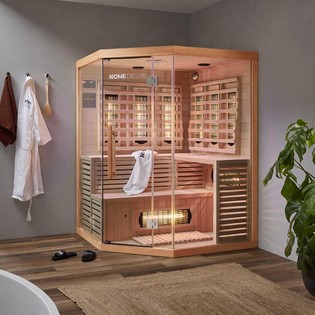
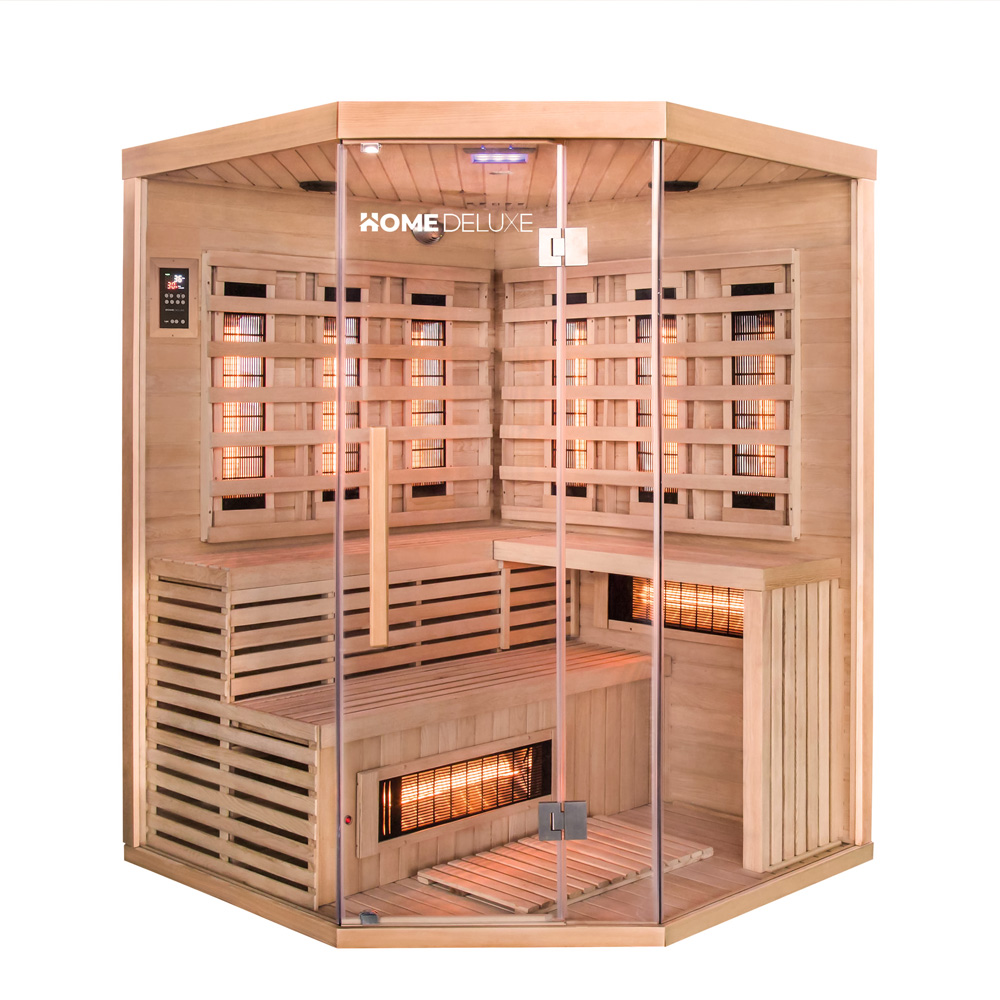
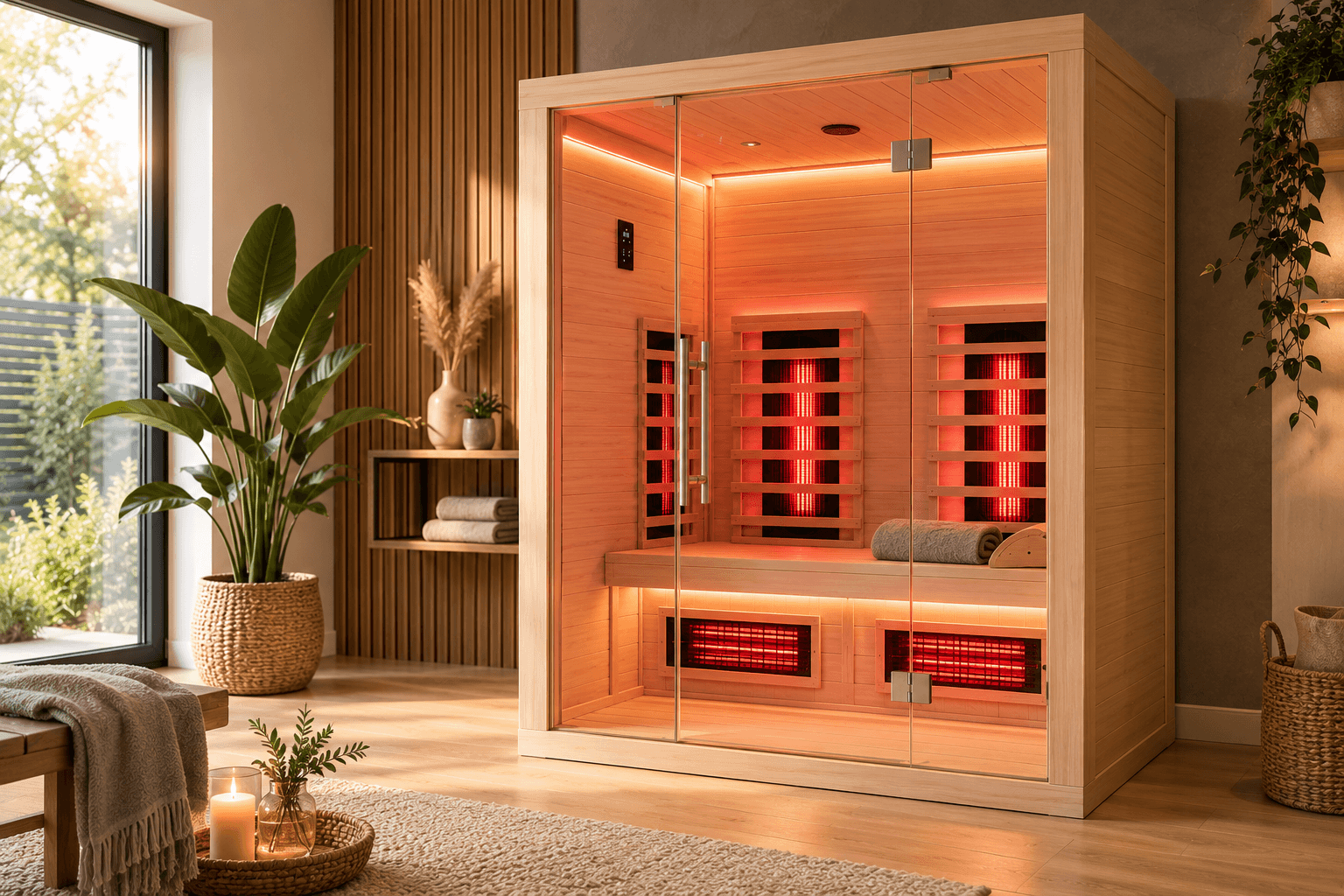
An infrared cabin works differently: instead of heating the surrounding air, infrared heaters transfer warmth directly to the body – similar to the warmth of the sun. This means operating temperatures are much lower at around 30–60 °C, while the heat still feels pleasantly deep and soothing. Many people find this gentler and easier to fit into everyday life.
Benefits of an Infrared Cabin
- Ready almost immediately: Minimal heat-up time makes it ideal for spontaneous relaxation.
- Energy-efficient: Uses significantly less electricity than a traditional sauna.
- Deep warmth: Can feel soothing for tense muscles and joints.
- Space-saving: Suitable even for bathrooms, bedrooms or smaller niches.
- Gentler heat: Lower temperatures can feel more comfortable for people who are sensitive to intense heat.
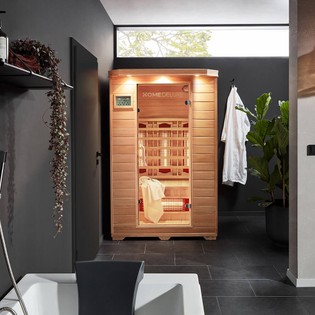
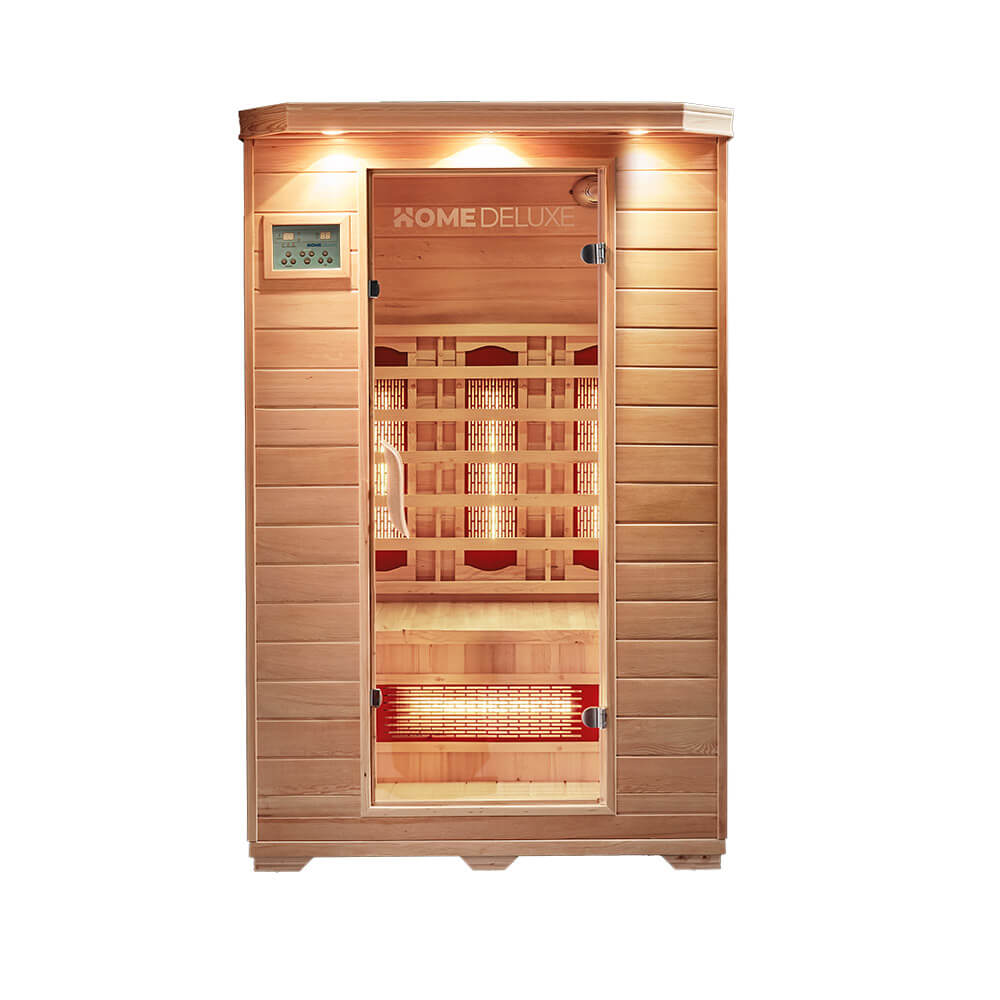
What an infrared cabin does not offer is the traditional sauna experience with infusions and humid bursts of heat – sweating is generally less intense. In everyday use, however, its advantages are clear: it heats up quickly, uses less electricity and requires little space. At Home Deluxe, the range extends from compact two-person cabins to larger family models with full-spectrum infrared heaters.
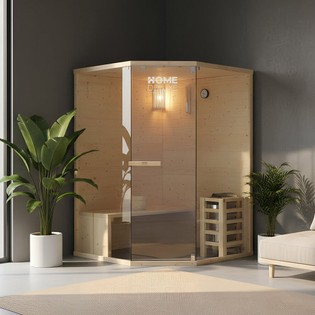
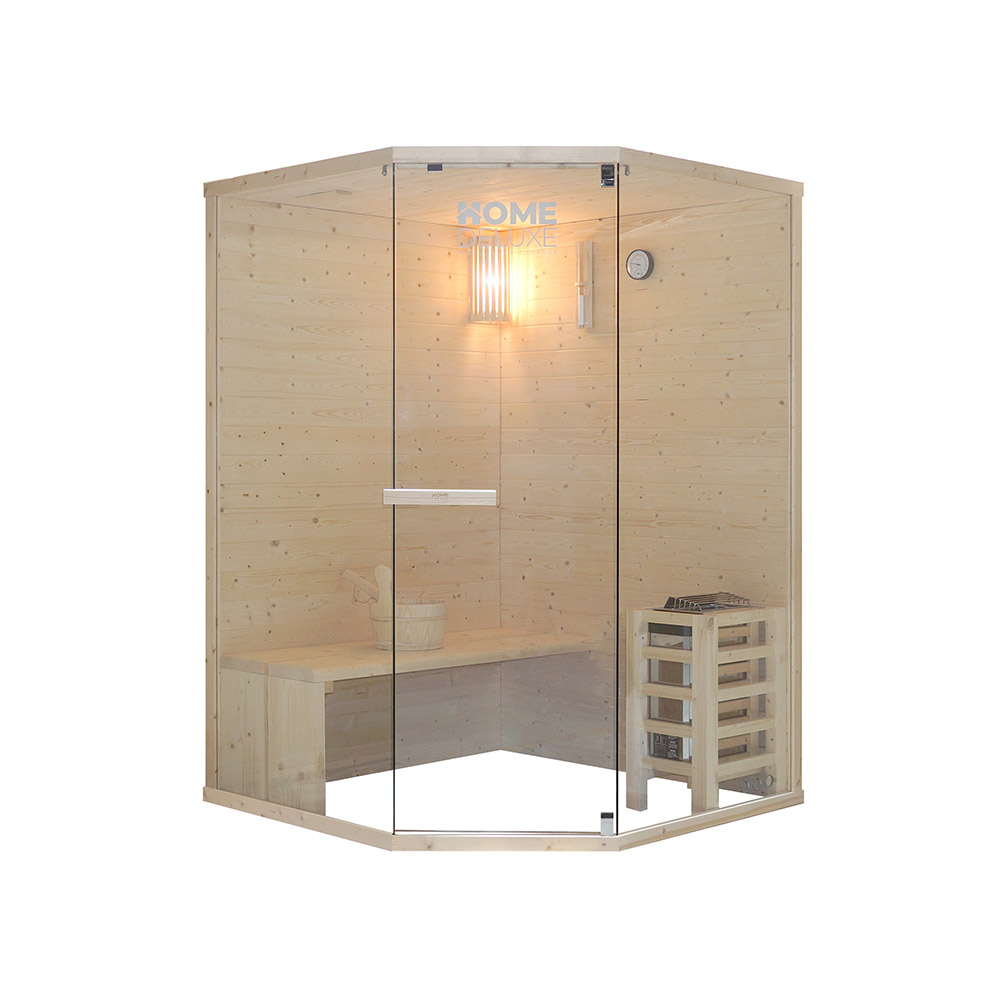
 15% mit Code: LAST15 ARUNA L HOME DELUXE Traditionelle Sauna - 130 x 190 cm für 2-3 Personen Traditionelle Sauna ARUNA L
1.599 €
15% mit Code: LAST15 ARUNA L HOME DELUXE Traditionelle Sauna - 130 x 190 cm für 2-3 Personen Traditionelle Sauna ARUNA L
1.599 €
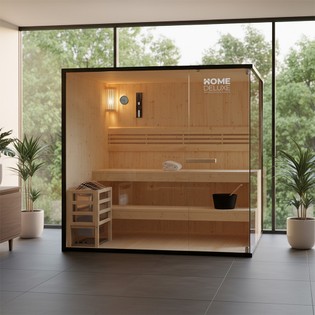
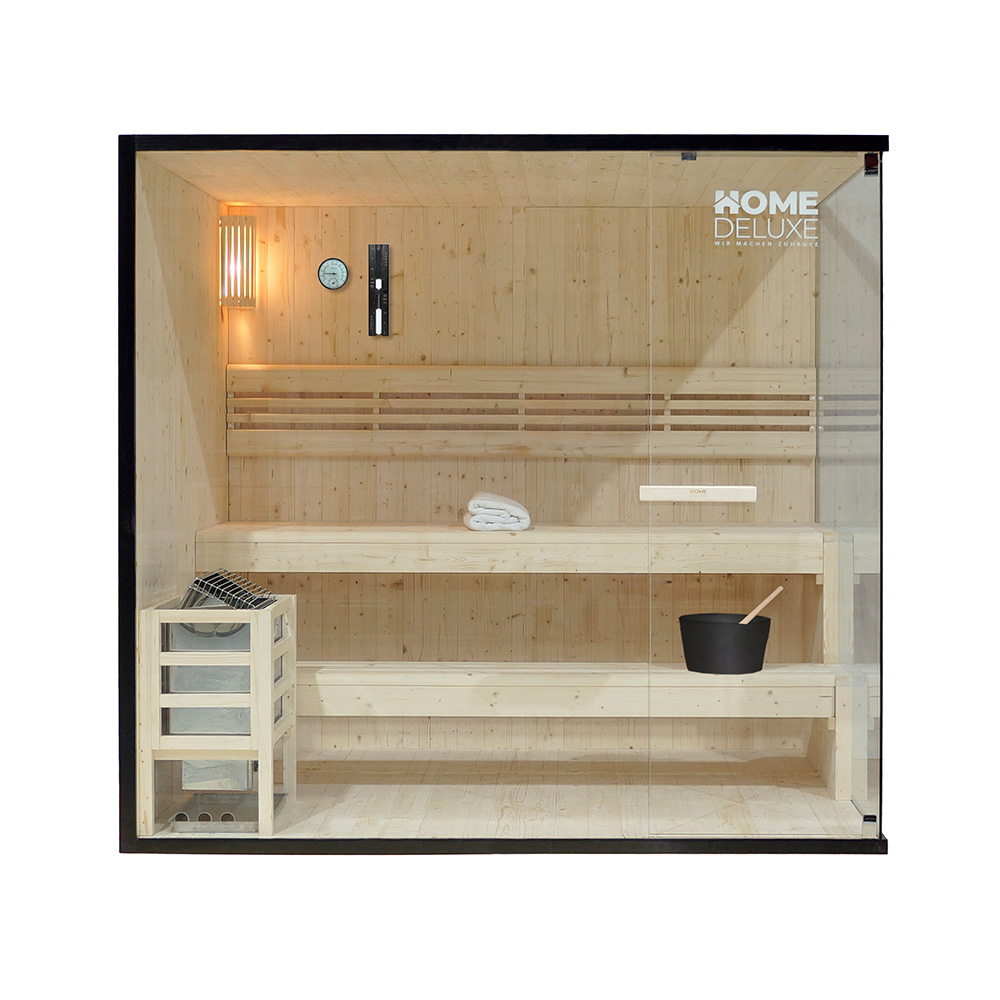
2.519 €Delivery time ca. 3-5 Werktage- TOPSELLER 15% mit Code: LAST15 SHADOW XL HOME DELUXE Traditionelle Sauna - 200 x 150 cm für 5 Personen Traditionelle Sauna SHADOW - XL
2.399 €
3.249 €Delivery time ca. 3-5 Werktage - TOPSELLER 15% mit Code: LAST15 CUBE XL HOME DELUXE Outdoor Sauna - 194 x 220 cm für 6 Personen Outdoor Sauna CUBE XL
2.799 €
3.949 €Delivery time ca. 3-5 Werktage - 15% mit Code: LAST15 CUBE S HOME DELUXE Outdoor Sauna - 194 x 120 cm für 2 Personen Outdoor Sauna CUBE S
1.699 €
2.399 €Delivery time ca. 5-10 Werktage
- 15% mit Code: LAST15 NERO XXL HOME DELUXE Infrarotkabine - 190 x 150 cm für 4-6 Personen Infrarotkabine NERO
from 1.949 €
2.679 €Delivery time ca. 3-5 Werktage - 15% mit Code: LAST15 SAHARA L HOME DELUXE Infrarotkabine mit Vollspektrumstrahler - 150 x 120 cm für 3 Personen Infrarotkabine SAHARA - L mit Vollspektrumstrahler
1.499 €
2.099 €Delivery time ca. 3-5 Werktage - 15% mit Code: LAST15 SAHARA XXL HOME DELUXE Infrarotkabine mit Vollspektrumstrahler - 150 x 150 cm für 4 Personen Infrarotkabine SAHARA - XXL mit Vollspektrumstrahler
1.699 €
2.399 €Delivery time ca. 3-5 Werktage - TOPSELLER 15% mit Code: LAST15 REDSUN M HOME DELUXE Infrarotkabine mit Vollspektrumstrahler - 120 x 105 cm für 2 Personen Infrarotkabine REDSUN - M mit Vollspektrumstrahler
1.049 €
1.399 €Delivery time ca. 3-5 Werktage
Our partners for sustainable development

Newsletter
Yes, I want to stay up to date with new products, news and offers. Please send me a newsletter.
Your 10€ welcome discount
You agree that your data will be used to send you our newsletter. The newsletter can be cancelled at any time. Further information and cancellation notices can be found in our privacy policy.